

Car braking system: design, operation, faults and professional solutions
The braking system is one of the most important safety systems in a car. It converts pedal force into hydraulic pressure and friction, reliably decelerates the vehicle and helps maintain stability in critical situations. This guide explains the basics, components and driver assistance systems, compares disc and drum brakes including the parking brake and regenerative braking in electric vehicles, highlights typical faults and symptoms, covers maintenance and service intervals, and outlines professional repair methods and cost factors.
Braking system overview: components and functions
The braking system in a car comprises the service brake for decelerating the vehicle while driving and the parking brake for securing it when stationary. Hydraulic brake circuits provide redundancy. Assistance systems such as ABS and ESC support stability at the limits of vehicle dynamics. All components work together seamlessly, but using the correct parts, ensuring proper installation and maintaining a clean hydraulic system are essential.
Service brake, parking brake and brake circuits
The service brake operates hydraulically via the brake pedal and acts on all four wheels. Two diagonally split brake circuits are commonly used so that, in the event of a failure, the other circuit can continue to provide braking. The parking brake keeps the vehicle stationary – mechanically via cables or electrically as an EPB – usually acting on the rear axle.
Main brake components
The brake pedal transmits the driver’s input.
The brake booster reduces the amount of force required.
The master cylinder generates system pressure.
Lines and hoses distribute the pressure to the actuators: brake callipers on disc brakes or wheel cylinders on drum brakes.
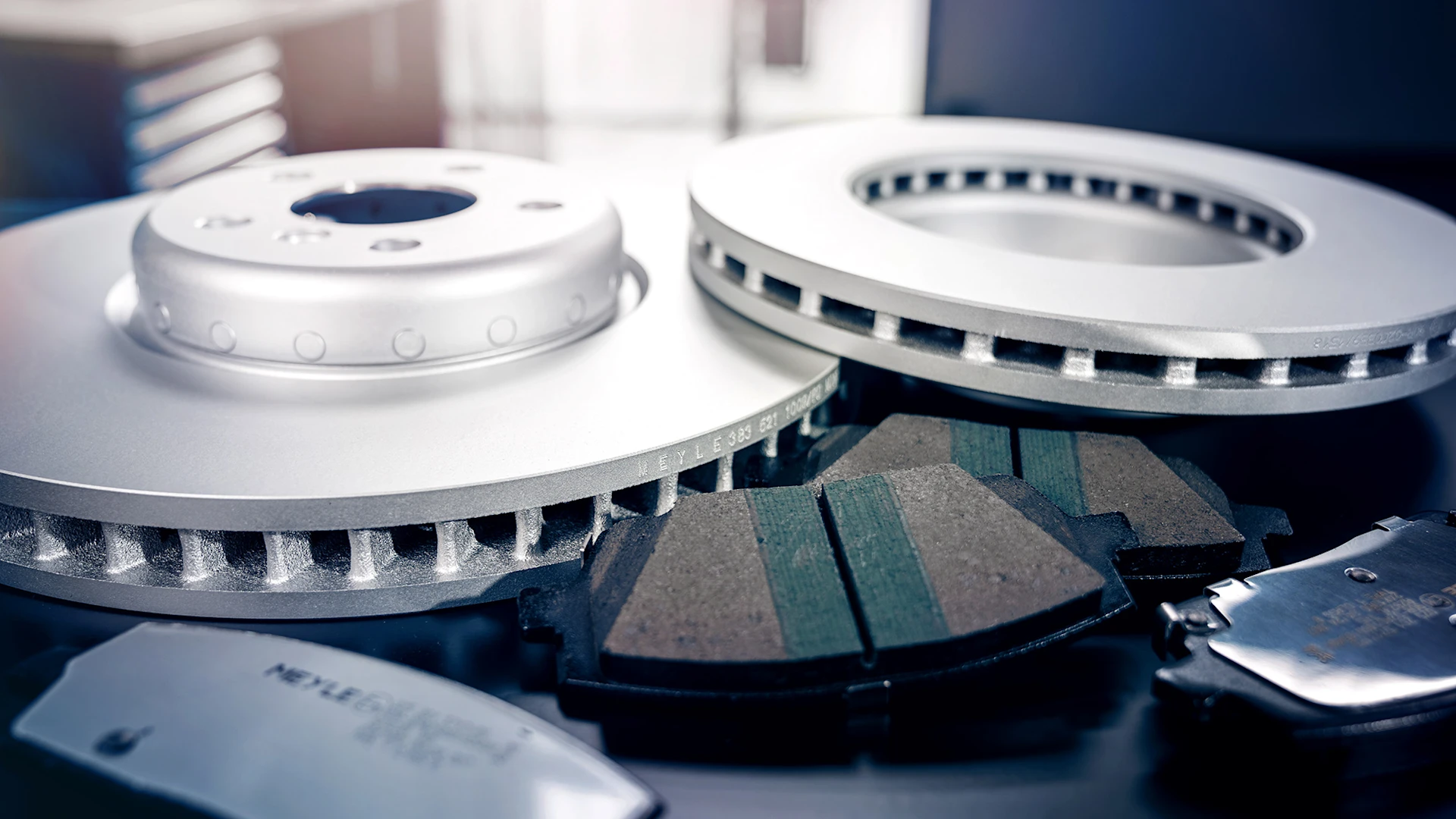
Brake pads or brake shoes press against brake discs or drums, converting kinetic energy into heat.
Assistance systems: ABS, EBD/ESC – the basics
ABS prevents the wheels from locking up and maintains steering control even under heavy braking. It is based on ABS sensors, which continuously measure wheel speeds and immediately detect deviations. EBD builds on this by distributing braking force according to the vehicle’s load and driving conditions, ensuring optimum use of the front and rear axles. If the vehicle enters an unstable driving situation, ESC selectively applies the brakes to individual wheels to help restore vehicle stability. All these functions depend on a technically sound hydraulic system capable of maintaining stable pressure.
How does a car braking system work?
The master cylinder generates pressure, which is transmitted to the wheels with minimal loss. Braking torque is generated at the friction surfaces, while the resulting heat is dissipated.
Hydraulics: pressure build-up, force transmission and heat
When the vehicle brakes, pressure in the brake fluid increases, moving the pistons in the brake callipers or wheel cylinders. This brings the brake pads or shoes into contact with the disc or drum, with friction generating the braking torque. Brake discs dissipate the resulting heat efficiently into the surrounding air, while drums are somewhat less effective at doing so. Fresh brake fluid with a low moisture content helps maintain stable pressure and protects against corrosion.
Disc vs drum brakes
Disc brakes operate in an open design, withstand high thermal loads and respond directly, making them standard at the front and also common at the rear. Drum brakes protect the mechanism, provide strong parking brake performance and offer a smooth response, making them typical on the rear axles of passenger cars and vans. The vehicle design and its intended everyday use determine which solution is appropriate.
Parking brake (mechanical/EPB)
The parking brake secures the vehicle when stationary. Mechanical systems operate via cables and levers, while electric parking brakes (EPBs) perform this function using a motor and offer additional features. On vehicles with rear disc brakes, the drum-in-hat configuration with separate parking brake shoes is often used. It is robust, easy to maintain and straightforward to integrate.
Electric vehicle specifics: regenerative and friction braking
Electric vehicles initially brake using the electric motor: it operates as a generator and recovers energy through regenerative braking. If this deceleration is not sufficient – for example at low speeds, when the battery is fully charged or cold, in wet or slippery conditions, or during emergency braking – the hydraulic friction brakes supplement the braking process. The control system combines the two braking forces so that the pedal feel remains familiar and deceleration stays consistent. Safety-relevant systems such as ABS and ESC continue to operate independently of the level of regenerative braking at all times.
Regenerative braking and the transition to friction braking
During light braking, regenerative braking provides most of the deceleration. As the required braking force increases or conditions become less favourable, such as with a cold or fully charged battery or in wet or slippery conditions, the friction brakes are automatically engaged. The driver experiences a consistent pedal feel because the distribution of braking force is electronically controlled.
Effects on brake pad and disc maintenance
As the friction brakes are used less frequently in electric vehicles, the brake discs can be prone to corrosion. Short, deliberate braking manoeuvres help keep the friction surfaces clean. During servicing, workshops inspect the brake pad contact surfaces, friction surfaces, piston movement and guide pin movement, and take the typically low use of the friction brakes in EVs into account.
Brake system faults and symptoms
Faults can become apparent through warning messages, an unusual pedal feel, noises or the vehicle pulling to one side when braking. Prompt professional diagnosis can help prevent consequential damage.
Defective brake pads and discs
When brake pads are worn or brake discs have developed grooves or excessive wear, braking distances increase, often accompanied by initial warning signs. Squealing can indicate either integrated wear indicators or a glazed brake pad surface. If this develops into noticeable juddering, the cause is often disc lateral runout, excessive disc thickness variation or uneven transfer of brake pad material. Whether replacement is necessary ultimately depends on measured values compared with the manufacturer’s specifications.
Defective wheel cylinders and brake callipers
If signs of moisture are visible on components and the brake fluid level is also falling, the brake pedal may feel soft – a typical indication of a leak. If piston movement is also restricted, the brake pads can remain in contact with the disc or the braking effect can become uneven. The vehicle may then pull to one side when braking, while the temperatures on the left and right sides differ. The appropriate solution is to replace the affected component correctly, followed by bleeding the brake system and carrying out and documenting a functional check.
Low brake fluid level
Over time, brake fluid absorbs water, lowering its boiling point and increasing the risk of corrosion. If air also enters the system, the pedal becomes soft and pressure can drop under load. Changing the brake fluid at the intervals specified by the manufacturer restores stable pressure and provides long-term protection for the hydraulic components.
Warning messages and indicator lights
Modern vehicles monitor the fluid level, ABS/ESC and EPB. If the sensors detect an irregularity, a warning such as ‘Brake system fault’ is displayed. This warning is usually associated with one or more of the symptoms described above and requires immediate inspection at a workshop. Continuing to drive is only advisable following a clear assessment of the risks; safety must take priority.
Maintenance, service intervals and safety
Proactive maintenance helps maintain braking performance and comfort. Workshops combine visual inspections, measurements and functional checks.
Visual inspection, measurements and brake fluid replacement
The first priorities are a thorough visual inspection and clear measurement results. Brake pad thickness, friction surfaces, disc thickness, drum internal diameter, lines and hoses are checked. Workshops also measure brake disc lateral runout and thickness variation, as well as the roundness and radial runout of brake drums. Finally, the brake fluid is changed in accordance with the manufacturer’s specifications and the system is professionally bled to ensure stable pressure build-up.
Bedding in new brakes and achieving even wear
New friction components require a short bedding-in period. Consistent, moderately firm braking allows the pads and discs to bed in properly, helping to prevent glazing and uneven transfer of brake pad material. A subsequent check on a roller brake tester confirms that braking forces are distributed evenly between the left and right sides of the vehicle.
Do not continue driving if warning signs appear – visit a workshop
If you experience a soft brake pedal, warning messages, grinding or squealing noises, or uneven braking, you should stop driving. The braking system is safety-critical, so prompt inspection at a workshop is essential to restore proper function and road safety.
Professional repair and servicing
Brake servicing should be carried out by a workshop. A structured process, working axle by axle and thorough documentation help minimise complaints.
Workshop diagnostic process
Diagnostics include a visual inspection, measurement checks, pressure and leak tests, and analysis of fault memory data. Axle symmetry is checked on a roller brake tester. A test drive is used to verify noises and pedal feel.
Axle-by-axle replacement, system bleeding and quality standards
Brake pads, discs and drums are replaced axle by axle. Oil-contaminated brake shoes and leaking wheel cylinders are consistently replaced. Brake system bleeding and proper brake fluid management are essential. Following the manufacturer’s specifications and quality standards ensures reliable braking performance.
Documentation, test drive and brake tester
Documented measurement results, torque specifications, bedding-in instructions and a brake tester report provide evidence that the work has been carried out correctly. A final test drive, including a comparison of temperatures on the left and right sides, completes the service.
Impact of material choice and driving profile
High-quality brake components help maintain consistent friction characteristics and reduce noise. Driving profiles involving high thermal loads accelerate wear. Application advice helps ensure that the choice of materials and customer expectations are properly aligned.
Quality, fit and range: solutions from MEYLE
MEYLE offers coordinated brake components for passenger cars and vans – from brake pads and discs to drums, shoes, callipers and wheel cylinders, along with the corresponding hardware. Practical MEYLE KITs combine compatible components to make axle-by-axle servicing easier.
Frequently asked questions (FAQ)
Where are the brakes on a car?
The service brake acts on all four wheels. The pedal, master cylinder, lines and actuators are installed throughout the vehicle, while the friction components are located at the wheels in the form of disc or drum brakes.
What does a braking system include?
The braking system comprises the brake pedal, brake booster, master cylinder, lines and hoses, brake callipers or wheel cylinders, brake pads or shoes, brake discs or drums, as well as assistance systems such as ABS and ESC.
How does a car braking system work?
Pedal force is transmitted hydraulically. Pistons in the brake callipers or wheel cylinders press the brake pads or shoes against the discs or drums. Friction generates the braking torque, while the resulting heat is dissipated. ABS and ESC intervene as required.
How much does a brake job or replacing brake pads and discs cost?
The cost depends on the vehicle class, parts prices, labour time and additional work such as bleeding the brake system or changing the brake fluid. Your workshop can provide the exact cost for your vehicle.
What does the message ‘Brake system fault’ mean?
The message indicates a fault, for example in the hydraulic system, ABS/ESC or EPB. Do not continue driving; have the vehicle inspected at a workshop.
Summary
The braking system combines hydraulics, friction components and electronics in a safety-critical system. Short stopping distances and stable handling depend on correctly matched components, professional installation and regular maintenance. Axle-by-axle replacement, defined measurement values and documented checks help ensure quality and comfort. For advice and servicing, your workshop or automotive parts supplier is the right point of contact.