


Control arm
Control arms: function, failure symptoms and importance for driving safety
The control arm is one of the central components of the suspension system in motor vehicles such as passenger cars and vans. It guides the wheel, transfers forces between the wheel carrier and the vehicle body, and therefore plays a key role in directional stability, steering precision and driving safety. Wear or damage has a direct effect on vehicle handling and can lead to safety-critical consequences. This guide explains the function and role of the control arm within the suspension system, typical symptoms of wear, common causes and the importance of a professional inspection in the workshop. Finally, the article outlines the role of quality, fit accuracy and the MEYLE steering and suspension product range.
What is a control arm and what is its function in a vehicle?
The control arm connects the wheel carrier to the vehicle body or axle beam and guides the wheel in a controlled manner as a central part of the wheel suspension system. It transfers longitudinal, lateral and braking forces between the wheel and the body, thereby stabilising wheel positioning in all driving situations. Together with bearings, bushings and the ball joint, it determines the wheel’s geometric guidance and therefore has a significant influence on driving dynamics. Its function is safety-critical: deviations in wheel guidance have a direct effect on steering and handling characteristics.
How is the control arm integrated into the wheel suspension and suspension system?
The control arm works together with other wheel suspension components. It is mounted to the body via elastic bearings and absorbs forces generated by acceleration, braking and cornering at the wheel carrier. Springs, dampers and the stabiliser complement the suspension kinematics, but all rely on the precise geometry of the control arm. If this precision deteriorates, camber, toe and caster angles change, noticeably affecting ride comfort and steering behaviour.
Which components work together with the control arm?
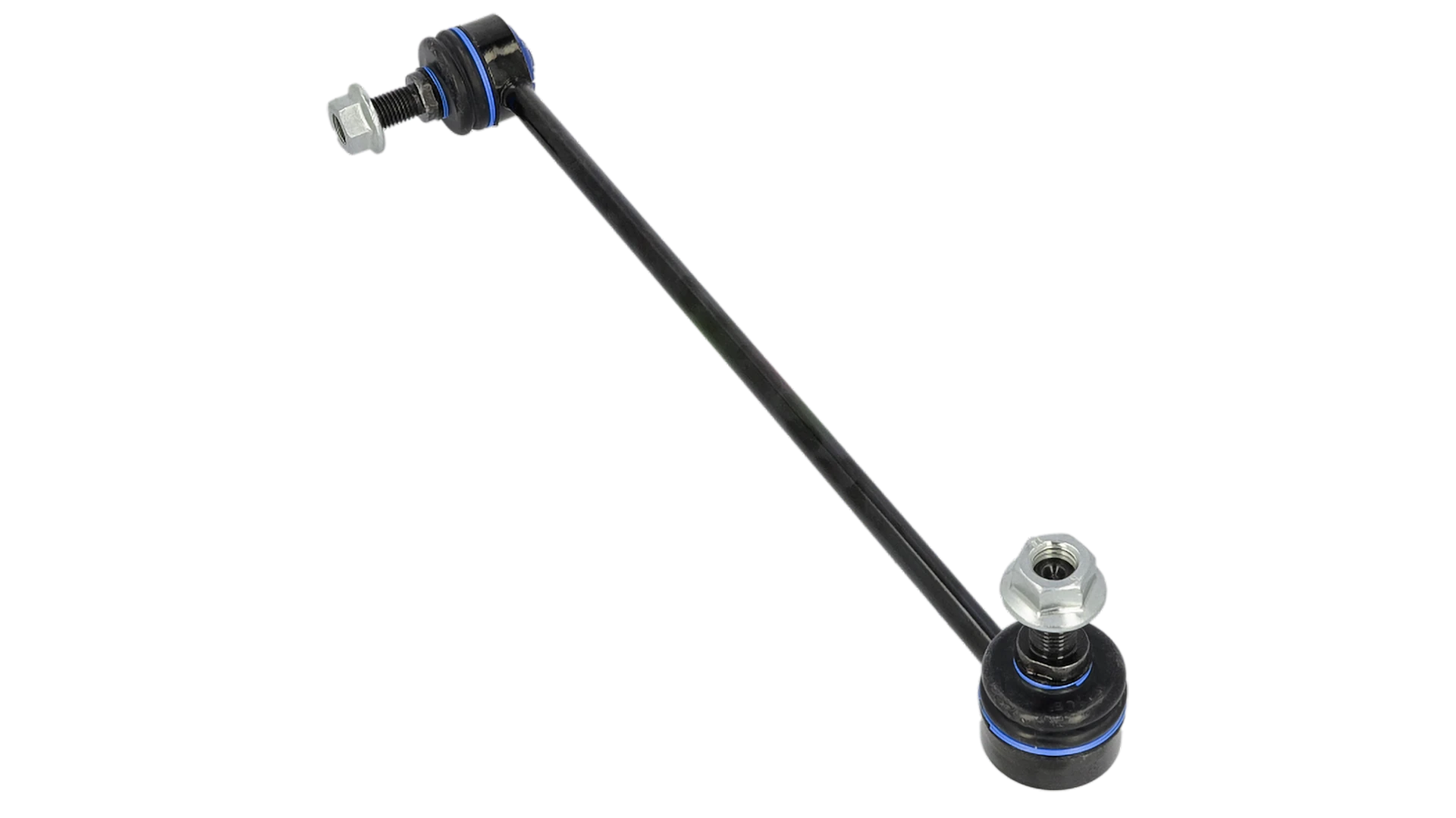
The main components working together with the control arm are the control arm bearings, control arm bushings and the ball joint. The rubber-metal bearings on the body side dampen impacts and allow the necessary movement of the wheel suspension. The ball joint connects the control arm to the wheel carrier and enables steering movement and suspension travel. Adjacent components such as wheel bearings, wheel hubs, tie rod end assemblies and stabiliser links also influence driving behaviour and are often assessed during diagnosis.
What types of control arm are there?
Control arms differ in design, installation location and function depending on the axle concept. Depending on the vehicle, simple control arms, wishbones or complex multi-link constructions are used to enable precise wheel and body movement. The specific design depends on axle kinematics, weight distribution and the required balance between comfort and driving dynamics.
Control arms on the front and rear axle
Control arms are fitted to both the front and rear axle, except on rigid rear axle systems. On the front axle, they guide the steerable wheel and transfer steering, braking and drive forces. On the rear axle, they ensure stable wheel guidance and controlled suspension movement. In multi-link axle systems, several control arms divide these tasks so that longitudinal and lateral forces can be managed separately and precisely.
Overview of designs and materials
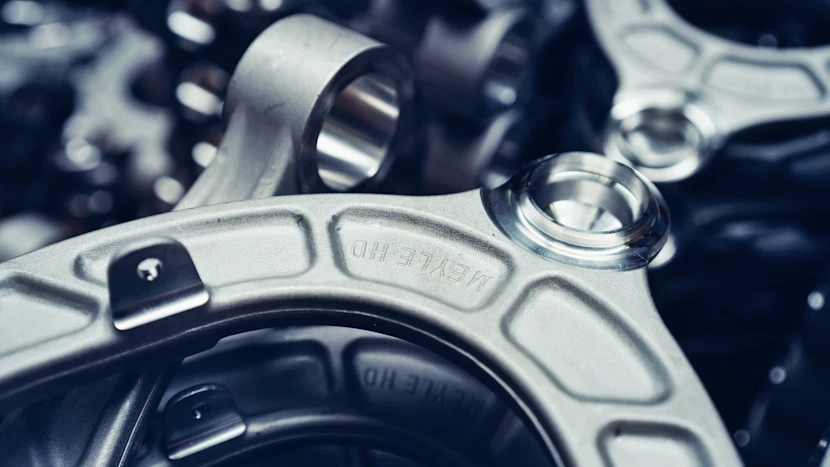
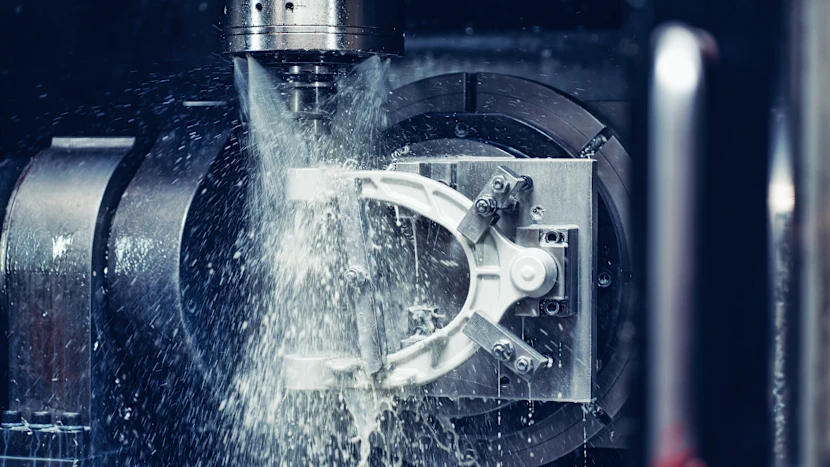
The most common types are pressed steel control arms, forged components and aluminium constructions. Steel offers robustness and cost efficiency, while aluminium reduces unsprung mass and is frequently used in modern suspension systems. Precise dimensions, material quality and accurate mounting point alignment are crucial.
How can you recognise a defective control arm?
A defective control arm is usually noticeable through imprecise handling, unusual noises and irregular tyre wear. These symptoms occur because worn bearings, damaged bushings or a faulty ball joint can no longer maintain accurate wheel guidance. Depending on the extent of the damage, the signs can range from minor comfort issues to clearly noticeable changes in steering and handling behaviour.
Typical symptoms while driving
The most common symptoms include knocking or clunking noises when driving over uneven road surfaces, vague steering feel, slight pulling to one side and uneven tyre wear. Steering vibration or instability may also occur during braking. Changed response behaviour in corners and when pulling away can also indicate altered axle kinematics caused by wear and excessive play.
What role do worn bearings and bushings play?
Worn control arm bearings and bushings are among the most common causes of suspension complaints. As wear progresses, the elastic components lose their preload, play develops and the wheel loses its precise geometric guidance. The result is altered axle geometry, increased noise and significantly less precise handling. In many cases, replacing the complete control arm is the technically correct solution, as the bearings and component function as one integrated unit.
What causes wear and damage to the control arm?
Wear is primarily caused by mechanical stress, ageing of the bearings and external influences such as poor road conditions. The control arm operates under constant load changes and is permanently exposed to weather, road salt and temperature fluctuations. The elastic mounting points in particular are subject to a natural ageing process that accelerates with mileage.
Everyday stresses: potholes, kerbs and mileage
Potholes, contact with kerbs and uneven road surfaces place heavy strain on the control arm and can prematurely damage bearings, bushings or the ball joint. Frequent heavy loading in commercial vehicle applications also accelerates wear.
Ageing, corrosion and material fatigue
Over time, rubber components harden, crack and lose their damping properties. Corrosion on metal components affects the structural stability of the parts. In combination with road salt, moisture and major temperature fluctuations, typical ageing patterns develop that eventually become noticeable through changes in vehicle handling.
What effect does a defective control arm have on handling and safety?
A worn control arm negatively affects directional stability, steering precision and vehicle stability. Since it plays a key role in wheel positioning, defects directly influence driving dynamics. If damage is ignored, secondary damage can develop in the tyres, steering system and other suspension components.
Effects on steering, tyre wear and axle geometry
A worn control arm changes toe and camber angles and often causes one-sided or uneven tyre wear. Steering becomes less precise; the vehicle feels less stable and may pull under changing loads. In combination with worn ball joints or bearings, stability decreases further, particularly at higher speeds and while cornering.
Why timely inspection by a specialist workshop is important
As the control arm is a safety-relevant component, it should be inspected by a specialist workshop as soon as the first signs appear. Professional workshops assess the condition of the components within the overall system and can also identify related defects, for example in bearings, ball joints or stabiliser links.
How are professional inspection and replacement carried out in the workshop?
Diagnosis and replacement should be carried out by a specialist workshop because suspension components are safety-critical and neighbouring components must always be assessed at the same time. The workshop views the control arm as part of a complete system consisting of wheel guidance, steering and braking components and coordinates the necessary work accordingly. For automotive parts distributors, correct vehicle-specific identification via the manufacturer part number and VIN is essential to reliably identify the correct component.
What does the workshop assess during diagnosis?
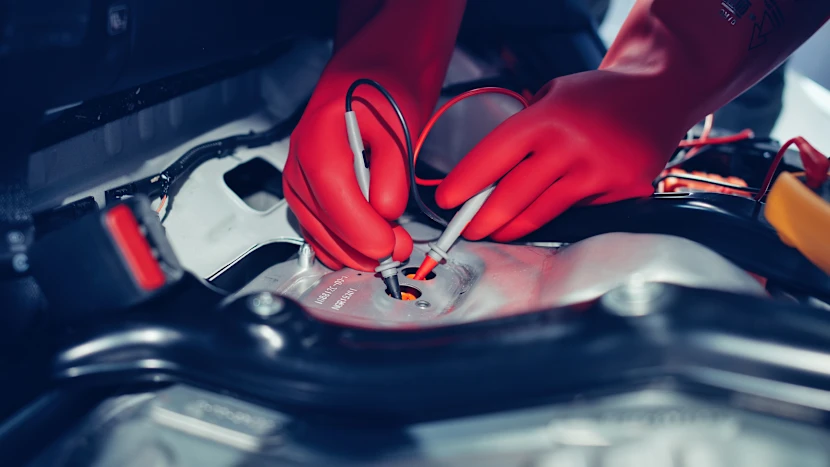
The workshop checks the condition of the bearings, bushings, the ball joint and mounting points and assesses wheel guidance under load. Tyre wear patterns, steering behaviour and noise development provide additional information. Based on these findings, the workshop determines which components should be replaced and whether additional axle geometry work is required.
Why should adjacent components also be inspected?
Components surrounding the control arm include the wheel bearing, wheel hub, tie rod end assembly, stabiliser link and steering system. Wear in one area increases the load on neighbouring components. A systematic assessment of the complete wheel suspension ensures consistent repair results and stable handling after repair work. After replacing a control arm, wheel alignment is advisable to correctly set the geometric values. On vehicles equipped with driver assistance systems, recalibration of the camera systems may also be necessary unless explicitly excluded by the manufacturer.
What role do quality and fit accuracy play in control arms?
For suspension components, material quality, dimensional accuracy and precise fit are essential for reliable performance. A control arm transfers high forces over many years while maintaining precise geometry. Even minimal deviations (1/10 of a degree) can affect axle geometry and influence handling characteristics and tyre wear. For automotive parts distributors and workshops, this means that component quality and vehicle-specific fit are not secondary considerations, but fundamental requirements for a durable and reliable repair.
Control arms, bearings and vehicle-specific identification
Manufacturer part numbers and vehicle-specific identification via VIN or KBA key numbers are essential for reliable parts selection. Control arms and their associated bearings form a functional unit and should be installed in coordinated quality. Clear identification reduces ordering errors and supports fast, reliable parts selection for automotive parts distributors and workshops.
What does a control arm do?
The control arm guides the wheel within the suspension system and transfers longitudinal, lateral and braking forces between the wheel carrier and the body. It ensures defined wheel positioning and is essential for directional stability and vehicle control.
How can you recognise a worn control arm?
Typical signs include clunking noises when driving over uneven surfaces, vague steering feel, slight pulling to one side and uneven tyre wear. Vibrations during braking can also indicate wear in the control arm, bearings or ball joint.
What are the consequences of a defective control arm?
A defective control arm negatively affects directional stability, steering precision and vehicle stability. Over time, it also causes uneven tyre wear and increased stress on surrounding suspension components.
Can you drive without a control arm?
No. Without an intact control arm, the vehicle loses controlled wheel guidance. The wheel can no longer maintain its defined position, and directional stability and steering precision are severely compromised. A vehicle with a defective control arm is not roadworthy and must not be driven.
Why should replacement be carried out by a specialist workshop?
The control arm is a safety-critical component integrated into a complex suspension system. A specialist workshop assesses the condition of the component, neighbouring parts and axle geometry together to ensure a professional repair result.
Which surrounding components should also be checked?
Relevant surrounding components include control arm bearings, control arm bushings, the ball joint, tie rod end assembly, stabiliser link, wheel bearing and wheel hub.
Summary
As a central suspension component, the control arm has a decisive influence on wheel guidance geometry, axle geometry and therefore driving safety. Wear in bearings, bushings or the ball joint becomes noticeable early on through noises, imprecise handling and irregular tyre wear. Professional diagnosis and expert replacement in the workshop ensure stable vehicle handling. MEYLE supports automotive parts distributors and workshops with high-quality control arms, precisely matched bearings and complementary steering and suspension components.