

Stabiliser links
Stabiliser links: connection for stability
The stabiliser link, also known as a sway bar, is a central connecting element in the suspension. It provides the mechanical connection between the stabiliser and wheel suspension and transmits forces that are exerted when cornering, on uneven surfaces or due to load changes. As a result, it plays a significant role in ensuring a vehicle’s stability, tracking and safety. It is a technically sophisticated precision component that directly influences driving comfort and safety.
What does the stabiliser link do in the suspension?
The main function of the stabiliser link is to transfer movements from the wheel suspension to the stabiliser, a torsion bar running perpendicular to the direction of travel. The stabiliser ensures that the body only leans to the side to a limited extent when cornering. The stabiliser link is thus the active transmitter of the forces acting between the wheels, axle and vehicle body.
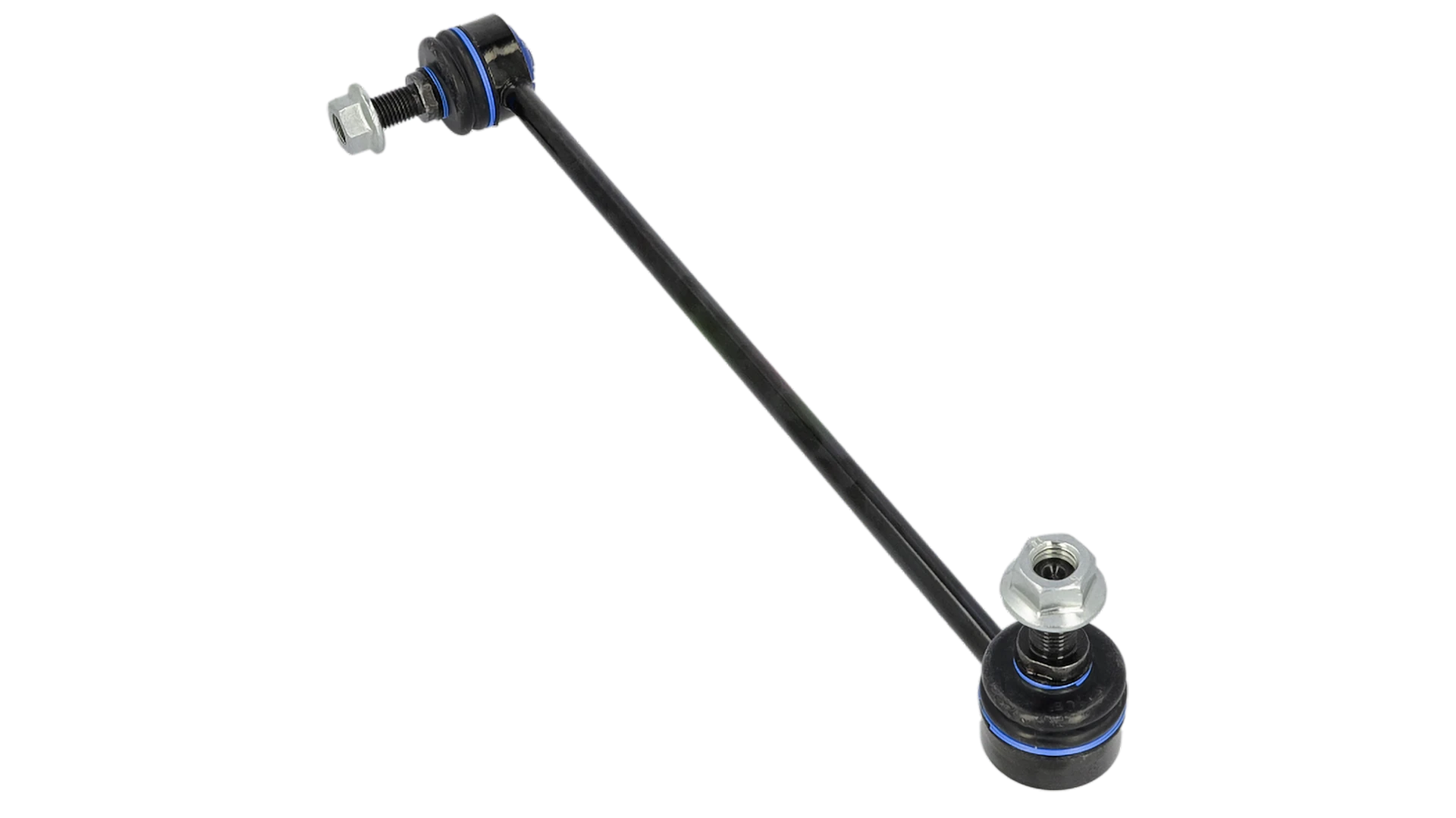
Connection between stabiliser and wheel suspension
In terms of design, the stabiliser link is a component with two joint points which establish the connection path between the stabiliser and the respective wheel suspension. It absorbs the up-and-down movement of the suspension and transmits it via the joint system. Think of the stabiliser link as a flexible force transmitter that ensures the vehicle remains stable both when driving straight and when cornering.
Force dissipation when cornering and over uneven surfaces
If one side of the vehicle is compressed more than the other in a curve, a torque is generated around the longitudinal axis of the vehicle. At that moment, the stabiliser link generates a counterforce by transferring energy via the stabiliser to the opposite side. This stabilises the vehicle and the sideways tilt is reduced. At the same time, the stabiliser link balances out the bumps by coordinating the movements of the wheels and ensuring even contact with the road. The result is an improved steering feel and controlled handling, even at high speeds or in changing road conditions.
Importance for driving stability and comfort
A functioning stabiliser link increases both driving stability and comfort. It ensures that the vehicle moves through curves in a controlled manner, reduces body roll and helps keep the tyres evenly on the road. The stabiliser link thus has a direct impact on driving safety, especially in modern suspensions with sensitive geometry.
Design and function principal
Stabiliser links are friction-locked components designed to withstand constant usage. They have to absorb both tensile and compressive forces and withstand millions of cycles of movement, without losing functionality or play.
Design and materials
A typical stabiliser link consists of a metal rod – made of steel or aluminium – with two opposing joint points. These joints can be designed as ball joints or as elastic bushings. In high-quality designs, the joints are sealed, filled with lubricant and protected against corrosion. In this way, mobility is maintained even under high stress and in fluctuating temperatures.
The choice of material influences rigidity and weight:
Steel stabiliser links are robust, dimensionally stable and resistant to high tensile and compressive forces.
Aluminium variants offer the advantage of low weight combined with high strength – particularly in the suspension of light passenger cars and sports cars.
Joints, bearings and movement
The joint heads of the stabiliser links are usually spherical in design and allow movement in multiple axial directions. The decisive factor is the balance between ease of movement and absence of play: only if the joint is precision-manufactured and operates under lubrication can it transmit movements accurately, without causing noise or vibration.
Elastomeric bearings at the end points serve a damping function. They prevent impact, absorb minute movements and transmit forces progressively. This increases acoustic and driving comfort.
Influence on roll stability
The stabiliser link is a component that has a direct influence on the roll of the vehicle. Defective or worn joints lead to a noticeable reduction in driving stability. At the same time, the load on the other components of the suspension increases, as the even distribution of forces is disrupted. This is why flawlessly functioning stabiliser links are crucial for safety, directional stability and confidence on the road.
Typical signs of wear and causes
As stabiliser links are constantly subjected to changing loads, they are naturally among the vehicle’s wear parts. They are exposed not only to purely mechanical stress, but also to thermal and corrosive stress.
Noise, play and imprecise handling
An early sign of wear is a quiet rattling or knocking sound coming from the area of the front axle – especially on uneven roads or while driving over small bumps. This is caused by worn-out ball joints or worn bushings that have lost their original fit dimensions. Even a slightly vague steering feel can indicate that the stabiliser link is no longer operating without play.
Influence of environmental conditions
Corrosion and a build-up of dirt are critical factors affecting the service life of the stabiliser link. If moisture gets into the joints, this leads to corrosion of the ball stud. The resulting rough surface of the ball stud then causes the ball stud seat to wear quickly and leads to a defect in the entire ball joint. Changes in temperature and aggressive gritting salt exacerbate this effect, which is why regular inspections at workshops are advisable.
Importance of professional maintenance
As a defective stabiliser link affects the balance between both sides of the vehicle, testing its function should be part of every wheel alignment and suspension diagnosis. Only an intact connection can ensure that the stabiliser can fully perform its function.
Design optimisation of MEYLE stabiliser links
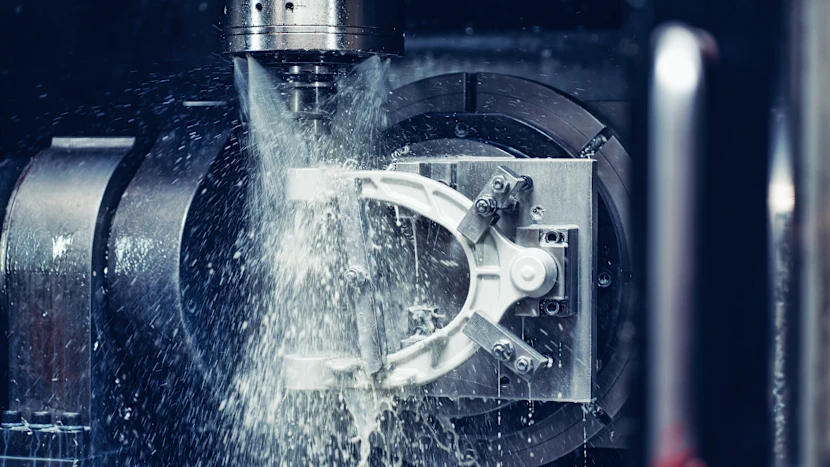
All MEYLE stabiliser links are manufactured perfectly to MEYLE specifications with an OE-compliant fit. Dimensional accuracy, thread profiles and joint geometries comply with the respective vehicle-specific requirements. This means they can be optimally integrated into the suspension and reliable power transmission is ensured.
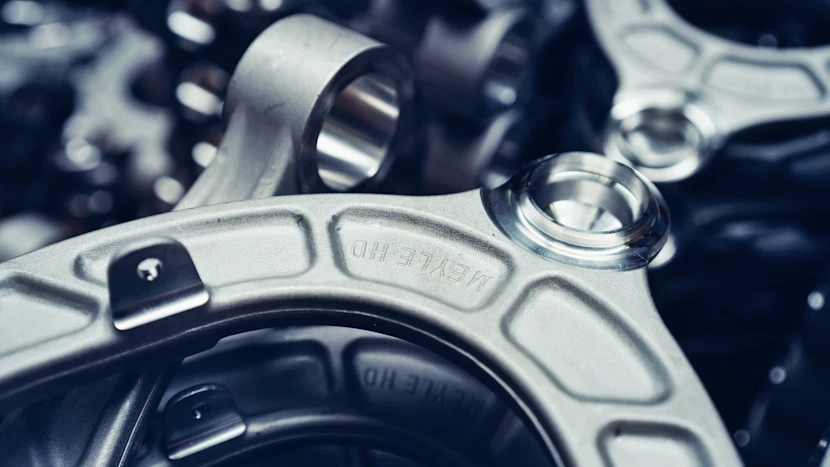
MEYLE HD: reinforced components for high loads
Stabiliser links are among the most heavily stressed components of the suspension. The MEYLE HD versions are therefore designed for an extended service life and combine precision-manufactured metal joints with highly resistant elastomer elements. This design reduces play and wear during constant movement and maintains the specified geometry of the suspension over the long term. These improvements lead to a longer service life, more precise steering and consistent performance even under constant usage. Manufacturing and testing are carried out exclusively in accordance with the internally defined MEYLE quality standards.
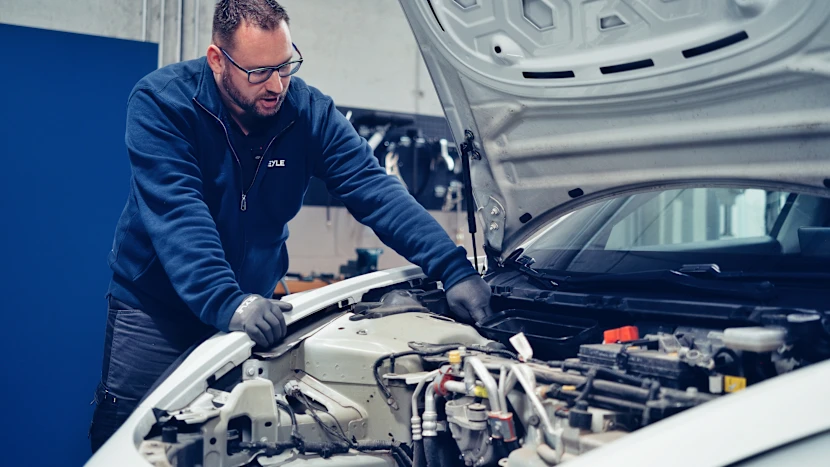
Testing in a workshop environment
Checking the stabiliser links is one of the standard procedures at every professional suspension inspection. It enables potential damage to be detected early on and prevents consequential costs to other components.
Visual inspection and functional testing
During a wheel alignment or replacement of other suspension components, you should check the stabiliser links for cracks, play and damage. Loose or rusty mounting points or damaged boots are clear signs of wear or leaks.
Noises as an indication
Knocking or rattling sounds from the front of the vehicle often point to worn-out stabiliser links. A workshop can use specific movement tests to determine whether the cause lies with the stabiliser link or in the nearby bearings.
Replacement only by specialist workshops
Stabiliser links should only be replaced by qualified specialist workshops. Only here can the correct preload and the appropriate torque for the threaded connections be ensured. As a result, the interaction between stabiliser, control arm and wheel suspension remains precise – the basis for consistently safe driving.
What is the purpose of a stabiliser link? It connects the stabiliser with the wheel suspension and transmits forces between the two axle sides. This reduces body roll and ensures stable road holding.
How can you tell if a stabiliser link is defective? Typical symptoms are knocking or rattling sounds or vibrations when driving on an uneven road. By carrying out a visual and movement check, a workshop can determine whether there is any play or damage.
Is it alright to carry on driving with a defective stabiliser link? That is not recommended. A defective stabiliser link reduces stability, impairs the driving experience and increases wear of other suspension parts. It should be replaced promptly by a specialist workshop.
What characterises MEYLE HD stabiliser links? MEYLE HD stabiliser links are structurally reinforced versions of the standard parts. They are manufactured from high-quality materials and optimised with improved joint designs and coatings – manufactured perfectly to MEYLE specifications with an OE-compliant fit and, in every detail, as precisely fitting as the original.
Why is a regular inspection important? Since stabiliser links play a key role in safety, they should be checked as part of every suspension inspection. In this way, wear or minor damage can be detected and rectified at an early stage.