Steering parts
Steering parts – functions, faults and replacement
The steering system is one of the most important systems in a vehicle. It precisely transmits the driver’s steering input to the wheels and ensures stability, safety and driving comfort. However, this complex system consists of many individual components that are subject to constant wear. Faults in steering parts can have serious consequences – from imprecise handling to potentially life-threatening situations. This guide provides a comprehensive overview of the design, function, typical faults, diagnosis and replacement of steering parts.
What are steering parts?
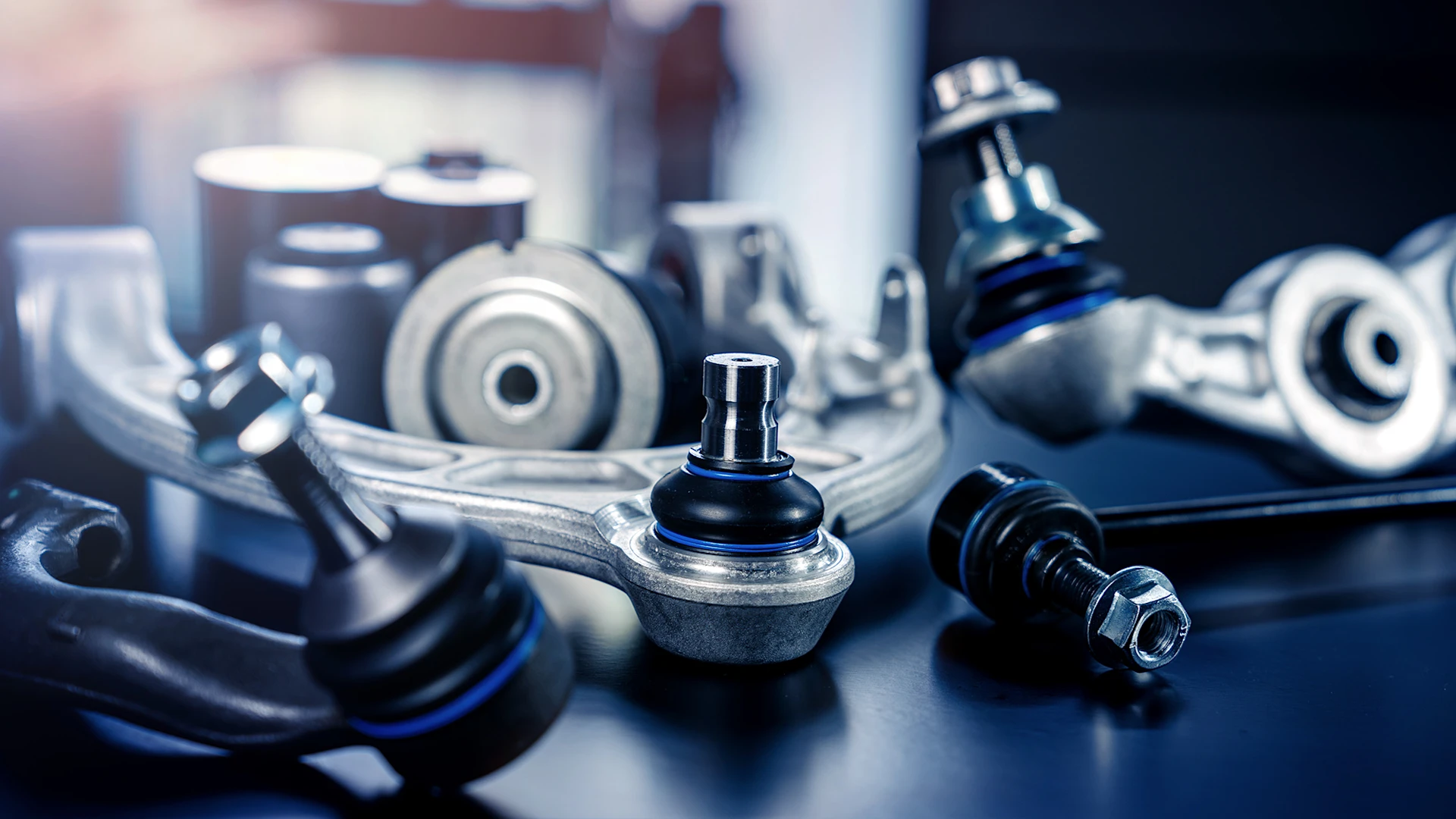
Steering parts are all components that transmit the driver’s steering input from the steering wheel to the wheels. They enable precise control of the vehicle’s direction and play a key role in driving safety and comfort. These include, among others, tie rods, tie rod end assemblies, axial rods, the steering gear, as well as the steering column and steering joint boots.
Functions of the steering system
The steering system has three core functions:
Precision: It must transmit the driver’s steering input exactly and without delay to the wheels.
Stability: It ensures straight-line stability and a secure driving feel, even at high speeds or in crosswinds.
Safety: In critical situations, it enables quick evasive manoeuvres and supports assistance systems such as ESP and ABS by optimising tyre contact with the road.
Structure of the steering system: from steering wheel to wheel
The steering system is a chain of components connected mechanically, hydraulically or electrically. It includes:
Steering wheel: The driver’s input interface.
Steering column: Transfers movement from the steering wheel to the steering gear.
Intermediate steering shaft: Compensates for angular offsets and length changes.
Steering gear: Converts rotary motion into linear movement.
Tie rod and axial rod (inner tie rod): Transfers movement from the axial rod to the tie rod end assembly (tie rod) and connects the steering gear to the tie rod (axial rod).
Tie rod end assembly: Connects the tie rod to the steering rear-axle knuckle/wheel carrier.
Wheel carrier ⁄ rear-axle knuckle: Holds the wheel and is connected to the control arm via ball joints.
What steering parts are there?
The steering system consists of several precisely coordinated components. Each part performs a specific function – from force transmission to protection against wear. Together, they ensure safety, driving comfort and accurate wheel alignment.
Tie rod and tie rod end assembly
Tie rod: A rigid rod that transfers steering movement from the axial rod to the tie rod end assembly. It is also used to adjust wheel alignment.
Tie rod end assembly: A ball joint that connects the tie rod to the rear-axle knuckle. It allows the necessary wheel movement during steering and suspension travel. Wear in the tie rod end assembly is often noticeable as play in the steering.
Axial rod (inner rod / tie rod)
The axial rod connects the steering gear to the tie rod. It is also a ball joint that accommodates axial movement and transmits steering forces. A defect here leads to play in the steering and imprecise handling.
Steering gear
The steering gear is the heart of the steering system. It converts the rotational movement of the steering wheel into linear movement of the tie rods. Various technologies support this function:
Mechanical steering: Without assistance, now mostly found only in older vehicles.
Hydraulic power steering: A hydraulic system assists steering effort. The driver receives more road feedback.
Electric power steering (EPS): An electric motor supports steering. It is more efficient and enables additional assistance systems.
Electro-hydraulic power steering: A hybrid system combining both approaches.
Intermediate steering shaft, steering column
Steering column: This connects the steering wheel (input medium) to the steering gear. It is often telescopic and collapsible to reduce injury risk in an accident.
Intermediate steering shaft: This bridges the distance between the steering column and steering gear and reliably transmits force even with angular offsets. It compensates for lateral deviations and is designed to telescope in the event of an accident to reduce injury risk.
Strut bearings / suspension connection
Strictly speaking, strut bearings are part of the suspension, but they influence the steering. They form the upper connection of the suspension strut to the body. A defective strut bearing can cause knocking noises and impair steering precision.
Peripheral components
Peripheral components such as boots, dust protection elements and fastening parts should not be underestimated:
Steering joint boots: Protect joints (tie rod end assemblies, axial rods) from dirt and moisture. A tear quickly leads to corrosion and wear.
Dust protection: Similar to shock absorbers, it protects the piston rod of the steering gear.
Fastening materials: Bolts, nuts and clamps must fit precisely and allow the specified tightening torques to ensure safety.
Typical faults in steering parts
Steering parts are under constant use. They transmit forces, compensate for movement and are continuously exposed to dirt, moisture and impacts. With increasing mileage, typical wear patterns occur. These not only affect comfort but can significantly compromise driving safety. Initial symptoms are often underestimated or confused with tyre or suspension issues. This is where targeted diagnosis is essential: noises, play in the steering wheel or poor straight-line tracking are clear indicators of problems in the steering system.
Play in the steering, rattling, knocking, imprecision
Play in the steering: The steering wheel can be moved without the wheels responding immediately. This indicates worn joints (tie rod end assemblies, axial rods) or wear in the steering gear.
Rattling/knocking: Noises, especially when driving over uneven surfaces or steering while stationary, indicate worn joints or defective strut bearings.
Imprecision: The vehicle reacts with a delay to steering inputs, and straight-line stability is poor.
Steering wheel misalignment, vehicle pulling – influence of toe/camber
Crooked steering wheel: After hitting a kerb or improper replacement of steering parts, the steering wheel may sit off-centre. This clearly indicates incorrect wheel alignment.
Vehicle pulling to one side: This can be caused by incorrect alignment or a defective control arm and results in uneven tyre wear.
Visual inspection: boots, corrosion, joints
Regular visual inspection is essential:
Damaged boots: Cracks in steering joint boots are a warning sign. Dirt and water can enter and destroy sensitive joints.
Corrosion: Rust on joints or tie rods indicates insufficient protection or advanced wear.
Worn joints: When the vehicle is lifted, the wheel can be moved by hand without the tie rod moving. This is a clear sign of play.
Diagnosis and testing
Professional inspections combine various diagnostic methods – from visual inspection on a lift to test drives, wheel alignment and electronic diagnostics in modern vehicles. This is the only way to identify faults early and avoid consequential costs.
Visual inspection and play check on the lift
Visual inspection: Check all joints, boots and fastenings for cracks, corrosion or damage.
Play check: With the vehicle raised, the wheel is moved in different directions to detect play in tie rod end assemblies, axial rods, ball joints or wheel bearings. Special joint play testers, such as those from MEYLE, are ideal for this type of inspection.
Test drive: noises and straight-line behaviour
A test drive reveals information about driving behaviour. It can also provide valuable insights into the condition of the steering system and other components.
Noises: Rattling, knocking or clicking when steering or driving over uneven surfaces.
Straight-line tracking: Does the vehicle maintain direction or require constant correction?
Steering feel: Is the steering precise or vague?
Wheel alignment
Wheel alignment is essential after any work on steering parts. It ensures that toe, camber and caster are correctly set. Without alignment, increased tyre wear and poor handling are inevitable.
Notes on electric power steering
In electric power steering systems, faults may also be electronic. The vehicle’s fault memory provides information about issues such as the steering angle sensor, control unit or electric motor.
Replacement and best practices in the workshop
Replacing steering parts requires maximum precision. These are safety-critical parts where errors can have serious consequences. Workshops therefore follow clear best-practice rules – from correct installation to final wheel alignment. This ensures proper function and driving behaviour. Key points:
Safety: Work on the steering system is always safety-critical. The vehicle must be securely and properly lifted.
Tightening torques: All bolts must be tightened to the manufacturer’s specified torque. Fastening material that is too tight or too loose can cause damage or lead to dangerous situations.
Self-locking nuts: These must always be replaced.
Clamp bolts: For tie rod end assemblies, clamp bolts must be correctly positioned and properly tightened.
Further key aspects:
Axle-wise replacement: For tie rod end assemblies or axial rods, replacement in pairs is often recommended. If one component is worn, the corresponding part on the opposite side – exposed to the same conditions – is usually near the end of its service life. This avoids repeat repairs shortly afterwards.
Wheel alignment: After replacing steering components, wheel alignment is essential. For vehicles with electric power steering or assistance systems, calibration of the steering angle sensor may also be required.
Corrosion protection: New parts should be treated with corrosion protection before installation.
Boots: These protective covers must always be checked for cracks or porosity and replaced if necessary. They are crucial for the service life of the joints.
Quality makes the difference
OE specifications: material, accurate fit and durability
OE specifications: Parts in original equipment quality guarantee precise fit, high-quality materials and long service life. They are perfectly matched to the vehicle. MEYLE automotive parts, for example, are manufactured according to their own specifications with an OE-compliant fit and fit just like the original in every detail.
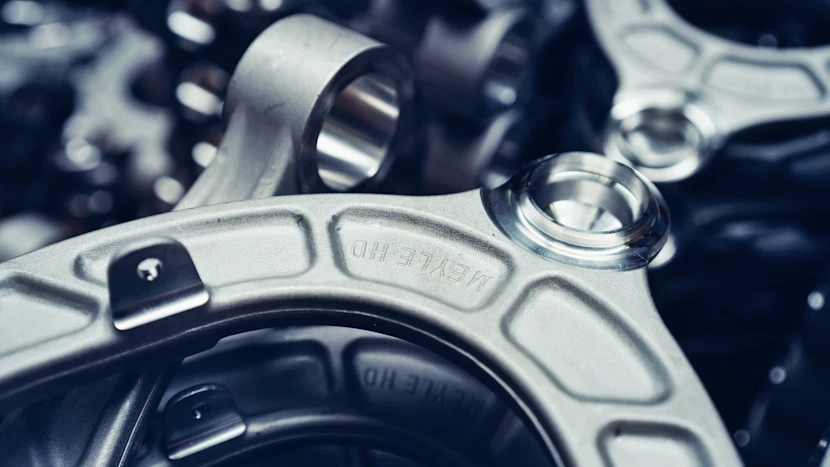
Advantages of MEYLE HD parts
MEYLE HD parts are technically optimised or reinforced to achieve a significantly longer service life:
Further developed design: More durable than the original.
High-quality materials: Special rubber compounds and surface treatments.
Longer service life: Backed by a MEYLE four-year guarantee.
Fewer repairs: Save time and money.
Guarantees, service and availability in wholesale
MEYLE offers a four-year guarantee on its HD parts. This underlines confidence in quality. For automotive wholesalers and workshops, this means high customer satisfaction and fewer complaints.
What role do steering parts play in vehicle geometry?
Steering parts such as tie rods are directly responsible for setting toe, which is crucial for straight-line tracking and tyre wear.
Can defective steering parts affect tyre wear?
Yes, worn steering parts or incorrect alignment lead to uneven and increased tyre wear.
Are there special steering parts for lowered vehicles?
With extreme lowering, special steering parts or adjusted suspension geometry may be required to ensure full functionality and safety.
How long do steering parts typically last?
The service life varies greatly but is often between 80,000 and 150,000 km, depending on driving style, road conditions and component quality.
Can I replace steering parts myself?
Safety-relevant vehicle components such as steering parts must be replaced by trained professionals. Workshops also have wheel alignment systems, and alignment/adjustment must be carried out after replacement.
Summary
The steering system is a complex system whose proper functioning is essential for driving safety. Regular inspections and timely replacement of worn steering parts are crucial. Choose quality: MEYLE HD parts in particular offer a reliable solution characterised by maximum precision and extended service life. This not only reduces costs but also ensures a safe and comfortable driving experience. Workshops and dealers can sustainably increase customer satisfaction with high-quality steering parts from MEYLE.