

Technical advice from the professionals
Product updates & innovations
Insights behind the scenes
Antibacterial cabin air filters
03/05/2026
Antibacterial cabin air filters: function and benefits
Clean air in the car is far more than just a comfort factor. It plays a key role in your well-being, your concentration and, not least of all, your health. Antibacterial cabin air filters not only protect you from dust and pollen, but also prevent the growth of bacteria and mould and even deactive some viruses. This guide will provide you with a detailed look at how they work, benefits, replacement intervals and practical replacement tips.
What are antibacterial cabin air filters?
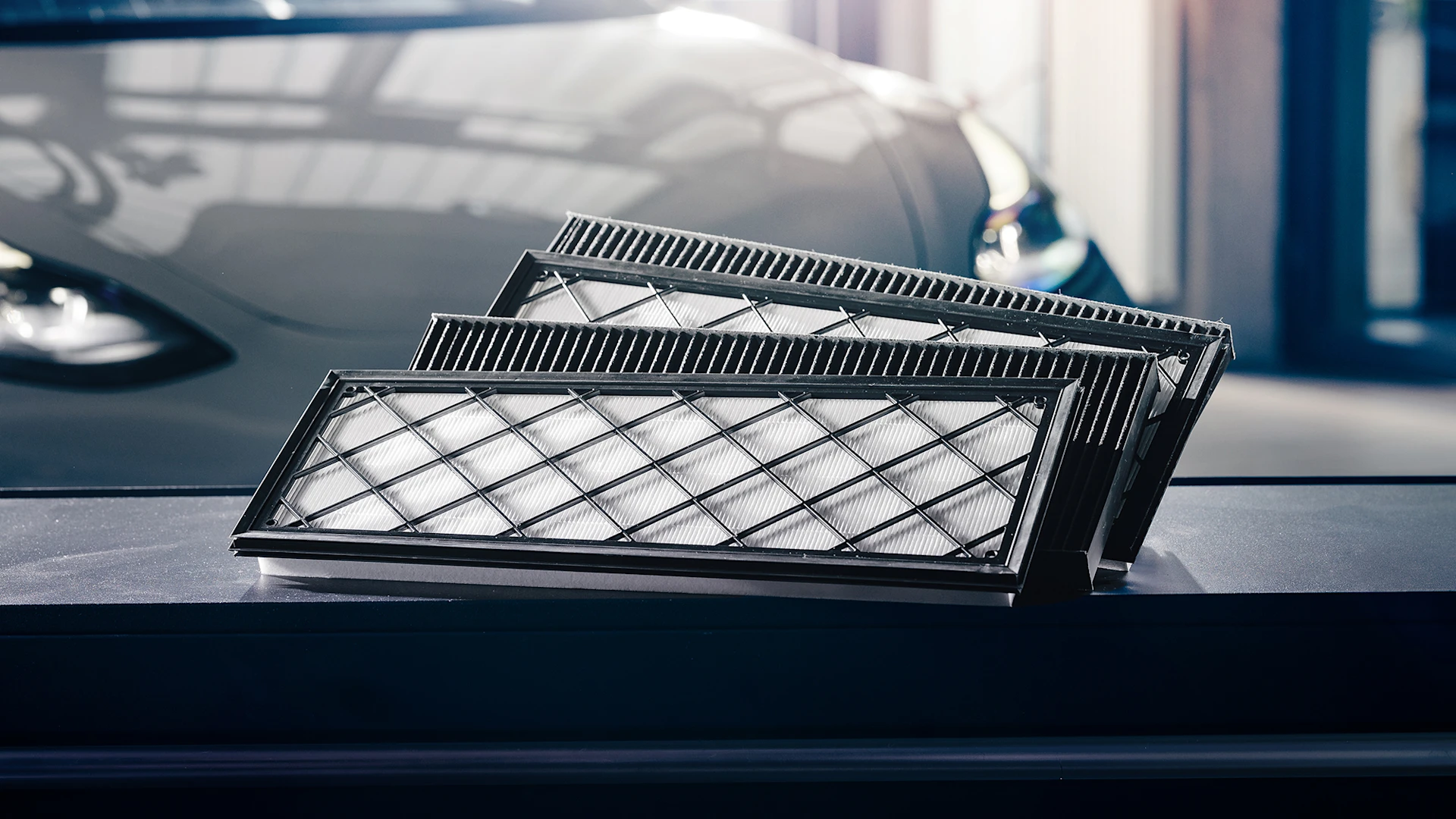
Cabin air filters – also referred to as pollen filters – remove dust, particles and pollen from the air that enters the vehicle cabin through the ventilation and air-conditioning system. But antibacterial filters do even more, as they feature a special coating that neutralises microorganisms and therefore minimises health risks.
How they differ from standard and activated carbon filters
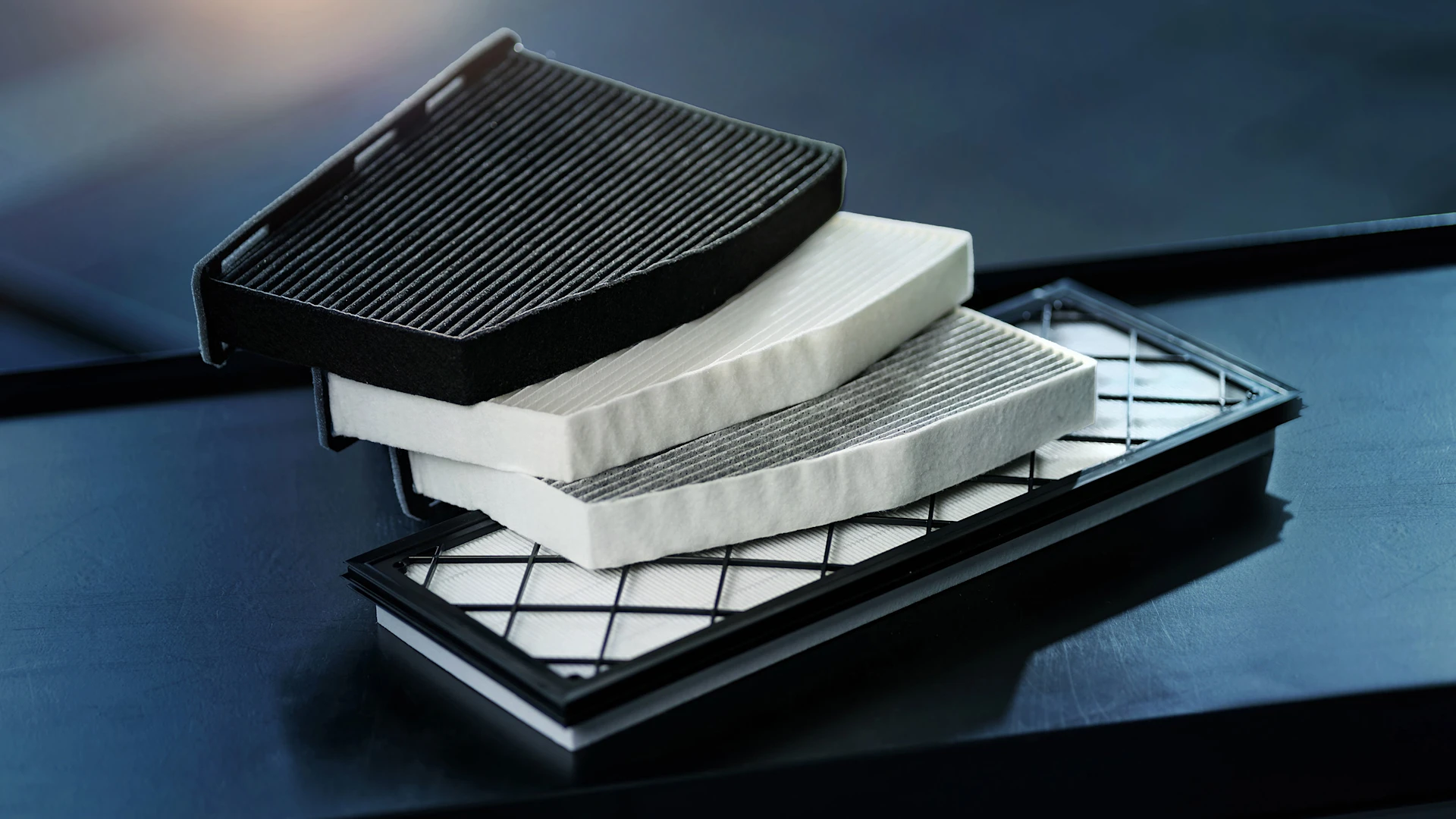
Standard filters remove larger particles and pollen, but do not offer any protection from odours, gases or germs. Activated carbon filters also keep harmful gases and unpleasant odours at bay. Black cabin air filters are often a visual sign of this additional coating of activated carbon. Antibacterial cabin air filters combine these benefits and feature an additional layer that inhibits the growth of bacteria and mould, making them the most comprehensive solution for clean air in the vehicle cabin.
The design and function of antibacterial filters
The protective effect is achieved through special coatings, which can contain, for example, polyphenols – natural, plant-based antimicrobial agents – and rely on the principle of chemical bonding to permanently neutralise pollutants. The materials ensure that any germs on the filter surface are rendered harmless, which not only maintains a germ-free environment even in damp conditions, but also reduces the risk of odours and mould growth.
What benefits do antibacterial cabin air filters offer?
Working on multiple levels, cabin air filters with an antibacterial coating not only boost comfort, but also promote health inside the vehicle.
Protect against bacteria, viruses and mould
Antibacterial filters reduce exposure to harmful microorganisms by preventing the growth of bacteria and mould in the filter media, which reduces the risk of respiratory infections and allergic reactions.
Less allergens and pollen inside the vehicle
Those who suffer from allergies benefit the most from clean cabin air filters. Antibacterial filters not only keep pollen at bay, but also prevent it from combining with other allergens in the filter and forming a breeding ground for complaints, which dramatically reduces symptoms like runny eyes and sneezing fits in the car.
Neutralising odours and harmful gases
Many activated carbon filters contain an antibacterial coating. This layer of activated carbon absorbs the exhaust, ozone and unpleasant odours of traffic and industry, keeping the air inside the vehicle nice and fresh, even in tunnels and stop-and-go city traffic.
Increased health and comfort for driver and passengers
Clean air free of germs (with HEPA filters) and pollutants ensures well-being and improves concentration behind the wheel. In particular, families with children and frequent drivers in urban environments benefit from the added layer of protection provided by antibacterial cabin air filters.
A comparison of cabin air filters – standard, activated carbon, antibacterial
There are significant differences between the different types of filter. Choosing the right filter not only ensures clean air, but also offers long-term health protection.
Advantages: Offer protection from pollen and larger dust particles and are the most affordable.
Disadvantages: Do not prevent the spread of germs or absorb odours or exhaust.
Recommendation: For drivers with minimal demands who are primarily interested in protection from pollen.
Advantages: Also offer protection from harmful gases like NOx, sulphur and hydrocarbon compounds as well as unpleasant odours inside the vehicle.
Disadvantages: Do not feature an antibacterial coating or keep germs at bay.
Recommendation: Recommended for frequent urban and long-distance drivers.
Advantages: Combine protection from pollen and fine dust with a special bacteria- and mould-inhibiting layer – for comprehensive all-round protection.
Disadvantages: Cost more than standard filters, but have to be replaced just as frequently.
Recommendation: Ideal for those with allergies, families and health-conscious drivers.
Advantages: Offer maximum performance as well as protection from viruses and fine dust.
Disadvantages: Are expensive and not available for every vehicle model – or must come as a standard feature.
Recommendation: Highly recommended for premium vehicles and very high demands in terms of air purity.
When should you replace the cabin air filter?
Because they tend to clog with dust, pollen and pollutants and can grow mouldy, cabin air filters have a limited service life.
Manufacturer specifications and real-world performance
Most vehicle manufacturers recommend changing the filter every 12,000 to 15,000 kilometres or once a year to prevent a dramatic drop in filter performance.
Symptoms of a clogged filter
A filter needs to be replaced when certain symptoms appear. If the air inside your vehicle smells musty, the car has an unpleasant odour, the windows fog up unusually quickly or a reduction in airflow has compromised heating or air-conditioning performance, it could mean that the filter is clogged. Then at the latest, it should be replaced and the entire system disinfected.
Seasonal replacement
Autumn is the best time of year to replace the filter, as the pollen season has come to an end and the filter is heavily laden with pollen. Regular cleaning and disinfection of the cabin air filter and the air-conditioning system also increases the service life.
Frequently asked questions about antibacterial cabin air filters
Can antibacterial cabin air filters also reduce fine dust in cities?
Yes, depending on the design. Antibacterial cabin air filters with activated carbon can keep out ultra-fine particles, which is particularly beneficial for health and well-being in urban areas with high levels of fine dust pollution.
Does the climate or region play a role in the filter set?
The filter can clog more quickly in regions with high humidity or high levels of dust, which makes it a good idea to change the filter more frequently than once a year in those areas.
Are there differences between branded filters and no-name products?
Quality manufacturers like MEYLE and other brands use tested materials and durable coatings that ensure protection over the long term and fulfil the VDI/ZDK 6032 standard, which defines hygiene requirements in terms of ventilation and air-conditioning systems in cars and trucks to maintain air quality. The antibacterial effect of cheaper no-name products can be much weaker or entirely non-existent. The particle removal efficiency and gas absorption of no-name filters are also often insufficient. MEYLE cabin air filters minimise pollutants in the breathing air, ensuring the highest levels of purity inside the car and fulfilling the most stringent quality standards.
Can an antibacterial cabin air filter increase vehicle value?
Yes, a freshly refurbished used vehicle with proof of air-conditioning maintenance and recently changed high-quality filters often increases value because the buyer views the car as well maintained.
Are antibacterial filters also suitable for electric vehicles?
High-quality filters make good sense especially in electric vehicles, as its passengers are more sensitive to air quality and odours as a result of the emissions of other road users (e.g. diesel exhaust). Many electric cars are fitted with high-performance cabin air filters as standard, and some manufacturers rely on specialised systems. For example, some Tesla models and packages offer Tesla HEPA filters and the so-called Tesla Bioweapon Defense Mode, which keep the cabin air very clean. And premium manufacturers integrate systems like Volkswagen’s Air Care that actively monitor air quality and filter out pollutants.
Summary
An antibacterial cabin air filter is more than just a comfort feature. It also plays a key role in your health and ensures a pleasant, fresh climate inside the car. Particularly for those with allergies, urban drivers and frequent drivers, it offers significant benefits over standard solutions. MEYLE therefore recommends changing filters regularly and itself uses premium-segment filters with maximum quality to ensure clean air in the cabin over the long term.